
Fei-Fei Li’s decision to sell World Labs is a sign that the next AI race will not be won by better models alone.
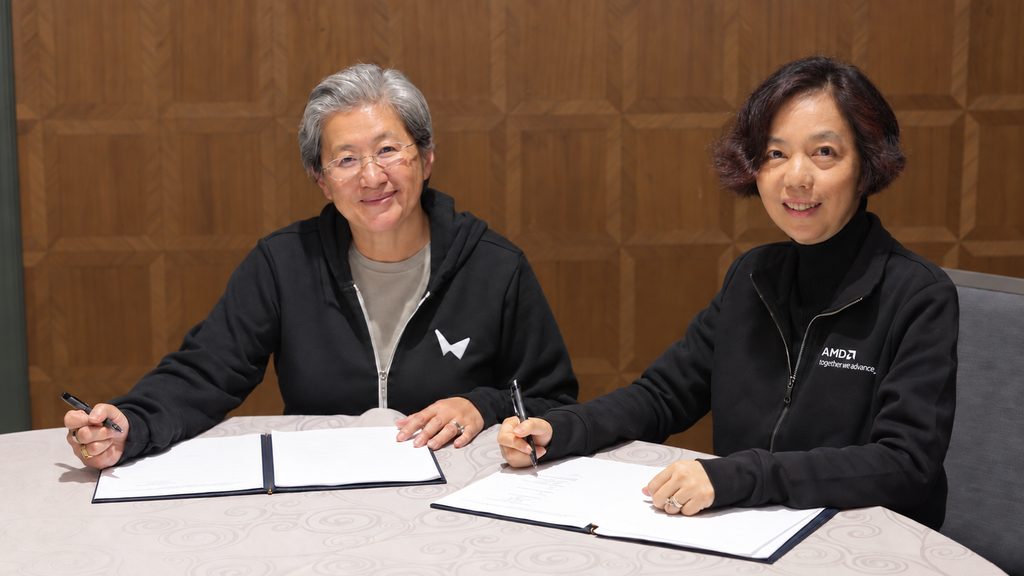
At first glance, AMD’s deal for World Labs looks extravagant. The chipmaker has agreed to pay $8.2 billion in stock for an AI laboratory founded at the beginning of 2024. If completed, it will be AMD’s second-largest acquisition, behind only its $48.8 billion purchase of Xilinx.[1] [2]
The timing makes the deal even more striking. Just seven months earlier, World Labs had raised $1 billion from investors including AMD, Nvidia, Autodesk, Fidelity and Emerson Collective. This was not a distressed company seeking rescue. It had fresh capital, a newly released product and a research agenda aimed at one of AI’s most ambitious frontiers: giving machines the ability to understand and operate in three-dimensional space.[3]
AMD is therefore not paying primarily for revenue, or even for a single product. It is buying a closer view of the workloads that may define the next era of computing.
Why Fei-Fei Li Chose Hardware
World Labs was founded by Fei-Fei Li, the Stanford computer scientist whose work on ImageNet helped catalyse modern deep learning. The company develops “world models”: systems designed to generate, reconstruct and simulate interactive 3D environments from text, images and video. The longer-term goal is spatial intelligence—AI that can reason about objects, geometry, movement and physical cause and effect, rather than merely process words or flat images.
Li has always framed this as a limitation of language-centric AI. In her letter announcing the AMD deal, she wrote: “The universe isn’t made up of words; it’s made of real things.”[4]
The more revealing passage came later:
“To do this requires scaling our efforts, widening our reach, and getting closer to the hardware. Without having a focused hardware effort, AI is hobbled in efficiency. And scale. And for our purposes, remains trapped in the digital world.”[4]
That is the strategic logic of the sale. Li is not arguing that World Labs has run out of ideas. She is arguing that its ideas can no longer be pursued as a software problem alone.
Spatial AI is unusually demanding. A language model can process a sequence of tokens; a system operating in the physical world may need to interpret video and sensor streams, maintain a persistent model of a 3D environment, simulate possible actions and respond in real time. Memory bandwidth, latency, energy efficiency, networking and the interaction between models and processors all become part of the research problem.
An independent laboratory can rent more computing power. What it cannot do as easily is shape the architecture of the machines it will need several years from now. Joining AMD gives World Labs access not only to scale, but to the people designing the underlying compute platform.
From Teaching Machines to See to Teaching Them to Act
Li’s career can be read as a sequence of attempts to move AI closer to the real world.
ImageNet, introduced in 2009, eventually grew to more than 14 million labelled images organised across more than 20,000 concepts. At a time when much of computer vision focused on better algorithms, ImageNet made a different bet: progress would also require data at unprecedented scale. The dataset, together with advances in neural networks and GPUs, helped trigger the deep-learning breakthrough that followed.[5]
World Labs represents the next step. Today’s models can write essays, generate software and recognise objects, yet they still struggle with the structure and behaviour of physical environments. A robot must understand that objects persist when hidden, that surfaces support weight, that actions change a scene and that a mistake in the real world has consequences.
The progression is clear. ImageNet helped machines see. World Labs is trying to help them understand space. The move to AMD is an attempt to design the models and the computing systems together.
Each step has pushed the bottleneck down the technology stack. In the ImageNet era, the shortage was large, well-labelled datasets. In spatial intelligence, the constraint increasingly includes the hardware needed to train, simulate and deploy models efficiently.
What AMD Is Really Buying
AMD’s official explanation is unusually direct. “Building the compute platforms for the next generation of AI requires a deep understanding of how models are evolving,” chief executive Lisa Su said when the deal was announced.[1]
That understanding matters because chip development moves slowly. An architecture chosen today may not reach large-scale deployment for several years. If a semiconductor company waits until new model requirements are obvious, it is already late. A frontier-model team can serve as an early-warning system, revealing where future workloads will put pressure on memory, networking, inference speed and power consumption.
Seen in that light, the acquisition fits a broader pattern in AMD’s dealmaking.
In 2022, AMD completed its $48.8 billion acquisition of Xilinx, adding field-programmable and adaptive computing technology.[6] In 2024, it agreed to buy ZT Systems for $4.9 billion, bringing in expertise in data-centre systems and rack-scale design.[7] The same year, it paid $665 million for Silo AI, expanding its model-development and AI software capabilities.[8]
The sequence runs from chips to systems, from systems to software, and now from software to frontier models. AMD is trying to become more than a supplier of processors. It wants a feedback loop spanning the entire AI stack.
World Labs is the most ambitious expression of that strategy so far. Its value to AMD is not simply the intellectual property it owns today, but the questions its researchers will force AMD’s engineers to answer tomorrow.
When Compute Becomes Productive Capacity
Nvidia chief executive Jensen Huang has offered an even broader version of this argument. At Morgan Stanley’s 2026 Technology, Media & Telecom Conference, he said: “I’m certain compute equals revenues. I’m certain also that compute equals GDP.” His point was that data centres are changing from systems that store and retrieve information into “AI factories” that produce tokens, intelligence and, ultimately, economic output.[9]
If that thesis is right, computing power is no longer merely an operating cost. It is productive capacity. More efficient infrastructure can generate more intelligence from the same amount of energy, just as a better factory can produce more goods from the same inputs.
Physical AI makes this relationship even tighter. Training machines to act requires simulation, repeated experimentation and continuous inference. Before a robot performs a task in a warehouse, a model may need to rehearse countless variations in a virtual environment. The more complex the task, the greater the demand for compute—and the more valuable it becomes to co-design models, software and hardware.
This is why the World Labs deal matters beyond AMD. It is a signal that the boundaries separating chipmakers, model laboratories, software platforms and product companies are beginning to dissolve.
The AI Stack Is Collapsing
The pattern is visible across the industry.
OpenAI paid about $6.4 billion for Jony Ive’s device start-up io, bringing product design and a potential new hardware interface closer to the model company.[10] Qualcomm agreed to buy AI software company Modular for roughly $3.9 billion, adding a compiler and software layer intended to make models run efficiently across different kinds of silicon.[11]
Nvidia took a different route with Groq. The arrangement was widely reported at about $20 billion, but it was formally structured as a non-exclusive technology-licensing agreement, with Groq founder Jonathan Ross and other employees joining Nvidia while Groq continued as an independent company.[12] [13]
In September 2026, Nvidia also agreed to acquire Hugging Face. Its regulatory filing disclosed an $11.9 billion purchase price plus up to $1 billion in employee-retention awards. That deal gives Nvidia a far stronger position in the distribution layer for open models, datasets and AI applications.[14]
The appetite extends beyond semiconductor companies. SpaceX agreed in June to acquire Anysphere, the maker of AI coding tool Cursor, in a $60 billion stock deal—an extraordinary price for control of a fast-growing software platform and its engineering talent.[15]
These transactions look different, but they share the same logic. Models determine what workloads look like. Compilers determine how efficiently they run. Chips determine their cost and speed. Developer platforms determine distribution. Devices determine how users encounter AI. Control over any one layer is valuable; control over several layers can create a self-reinforcing advantage.
The industry is no longer waiting for the next technology wave to mature before adapting to it. Companies are buying the teams and platforms that might define the wave itself.
Can AMD Close the Gap With Nvidia?
This is where the scale of AMD’s challenge becomes clear.
Nvidia already operates across much of the physical-AI stack. Its CUDA software ecosystem anchors developers to its chips. Omniverse provides tools for simulation and digital twins; Cosmos supplies world foundation models; Isaac supports robotics training and deployment; and its Vera Rubin platform provides the computing infrastructure underneath them. If the Hugging Face acquisition closes, Nvidia will also own one of the most important distribution hubs for open AI development.[14] [16]
Huang has described the prize in characteristically expansive terms: “Physical AI will revolutionize the $50 trillion manufacturing and logistics industries.”[17]
AMD cannot recreate that ecosystem simply by buying one laboratory. Research talent must be retained. Model insights must translate into product decisions. Hardware, software and developer tools must work well enough together to persuade customers to adopt them. Network effects built over years do not disappear after a single acquisition.
But World Labs gives AMD something it has lacked: a frontier research organisation whose needs can inform its hardware roadmap from the inside. That may help the company anticipate demand rather than merely respond to it. It also strengthens AMD’s case that an open alternative to Nvidia’s stack can span chips, systems and models.
For Fei-Fei Li, the sale is not an abandonment of her original mission. It is a judgement about what that mission now requires. Bringing AI into the physical world will demand more than elegant models and abundant data. It will require tight coordination between algorithms and the machines that run them.
World Labs gives AMD a map of where AI may be heading. Whether AMD can turn that map into a competitive platform before Nvidia extends its lead is the real $8.2 billion question.
Selected Sources
- AMD, “AMD to Acquire World Labs to Advance the Future of AI Compute,” 28 September 2026.
- AMD, “Form 10-Q: Xilinx Acquisition Purchase Consideration,” 2023.
- World Labs, “World Labs Announces New Funding,” 18 February 2026.
- Fei-Fei Li, “To Seek a Newer World,” 28 September 2026.
- ImageNet, “ImageNet.”
- AMD, “AMD Completes Acquisition of Xilinx,” 14 February 2022.
- AMD, “AMD to Significantly Expand Data Center AI Systems Capabilities with Acquisition of ZT Systems,” 19 August 2024.
- AMD, “AMD Completes Acquisition of Silo AI to Accelerate Development and Deployment of AI Models on AMD Hardware,” 12 August 2024.
- Morgan Stanley, “Jensen Huang: Compute Is the New Economy,” 17 March 2026.
- CNBC, “AMD Acquiring Fei-Fei Li’s World Labs AI Firm in Deal Worth $8.2 Billion,” 28 September 2026.
- Reuters, “Qualcomm to Buy Startup Modular for $4 Billion in AI Software Push,” 24 June 2026.
- CNBC, “Nvidia Buying AI Chip Startup Groq for About $20 Billion, Biggest Deal,” 24 December 2025.
- Groq, “Groq and Nvidia Enter Non-Exclusive Inference Technology Licensing Agreement to Accelerate AI Inference at Global Scale,” 24 December 2025.
- NVIDIA, “Form 8-K: Agreement to Acquire Hugging Face,” 2 September 2026.
- Reuters, “SpaceX Locks In $60 Billion Cursor Deal to Close Gap With Rivals in AI Coding Race,” 16 June 2026.
- NVIDIA, “NVIDIA Releases Major Collection of Open Source Agent Tools and Skills for Physical AI,” 2026.
- NVIDIA, “NVIDIA Expands Omniverse With Generative Physical AI,” 2025.