
Nvidia delivered another extraordinary quarter. The numbers were spectacular. The stock’s reaction was anything but straightforward.
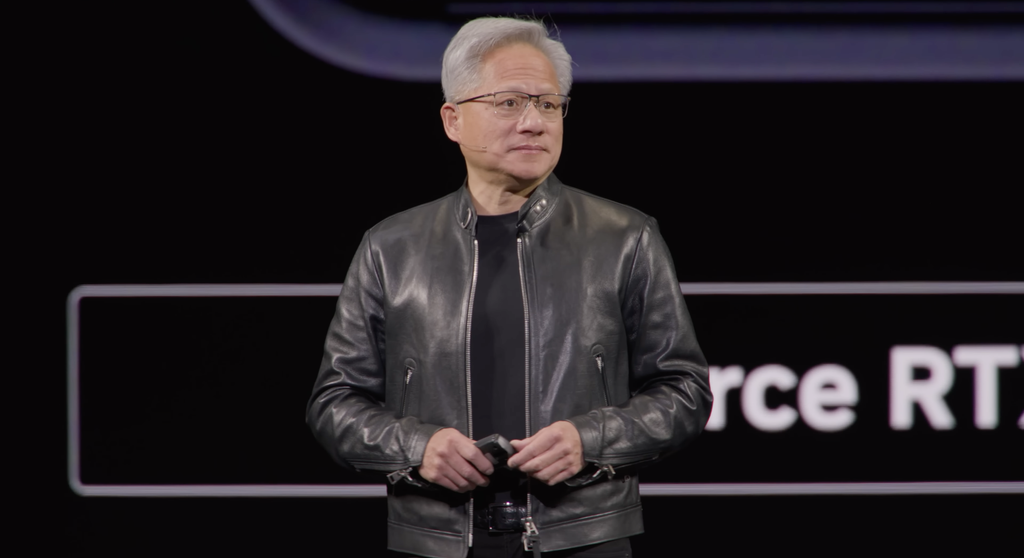
On 26 August, Nvidia reported revenue of $96.2 billion for the second quarter of fiscal 2027, up 106% year on year. Adjusted earnings per share came in at $2.22, more than double the figure a year earlier, while guidance for the following quarter reached $108 billion — the company’s first projected quarter above the $100 billion mark.
By almost any conventional measure, it was a blowout set of results.
And yet Nvidia’s shares initially fell about 3% in after-hours trading. Then, during the earnings call, the mood abruptly changed. Chief financial officer Colette Kress said Nvidia expected revenue to grow by roughly 70% in fiscal 2028, well above Wall Street’s previous consensus of about 45%. Jensen Huang added:
“AI has reached its inflection point. It’s doing useful work. Its tokens are productive and profitable. Now, compute is revenue.”
The shares reversed course and finished the extended session up 4.19%. On 27 August, they surged 8.7% in regular trading, adding roughly $442 billion to Nvidia’s market value and helping lift the Nasdaq Composite by around 1.6%. A day later, however, Federal Reserve chair Kevin Warsh used his Jackson Hole speech to reinforce expectations of higher interest rates, and Nvidia fell more than 4%.
Three days: an initial sell-off, a spectacular rally, and then a sharp reversal.
So why did a set of results that beat expectations across the board produce such a conflicted response?
01 — What Is the Market Waiting For?
This was hardly the first time Nvidia had beaten expectations only to see its shares struggle. Before the latest report, the stock had fallen on the day after each of the previous four earnings releases, with an average decline of 2.79%.
The problem is not that Nvidia’s performance has become less impressive. It is that extraordinary performance has become ordinary. Once a company is expected to score full marks every quarter, full marks cease to be a surprise; they become the minimum requirement.
The set-up before this report made the market’s ambivalence even clearer. Nvidia had fallen for seven consecutive sessions — its longest losing streak since September 2022 — shedding about 7.5% and more than $400 billion in market value. The last comparable run came as Ethereum’s transition away from proof-of-work caused demand for cryptocurrency-mining GPUs to collapse. Back then, the weakness reflected a genuine deterioration in the underlying business. This time, Nvidia’s fundamentals were not collapsing; they were accelerating.
The price action looked similar. The economic backdrop could scarcely have been more different.
Options markets told the same story. The implied post-earnings move had fallen to about 5.4%, from 6.5% in May. Traders were no longer willing to pay as much for the possibility of a surprise. Beat expectations? Of course. Beat them by a wide margin? That, too, had become part of the script.
Financial results alone were no longer enough to create excitement.
The turning point came during the earnings call. Kress’s 70% growth outlook for fiscal 2028 answered a different question. The quarterly results explained how much Nvidia had just earned; the long-range outlook suggested how much further the business might still run.
That distinction matters. Nvidia’s earnings have become so exceptional that investors no longer focus primarily on the latest quarter. They are trying to judge the durability of the entire AI investment cycle.
The earnings call — and especially Huang’s vision of what comes next — has become the true anchor for confidence and valuation.
But what, exactly, does the market still need to see?
02 — The Money Has Been Spent. Can It Be Earned Back?
The answer is fairly simple. Investors are not seriously questioning whether Nvidia can make money today. A company earning close to $60 billion in a single quarter has already settled that debate.
The real question is whether the AI industry can ultimately earn a return on the enormous amount of capital it is pouring into computing infrastructure.
That question goes to the heart of Nvidia’s business model. Nvidia does not sell consumer products that complete the commercial cycle at the point of purchase. It sells the picks and shovels of the AI economy. Its customers buy GPUs and build data centres, but those investments pay off only if end users eventually pay enough for AI products and services to cover the cost.
If customers further down the chain cannot monetise AI, demand for infrastructure rests on increasingly fragile foundations. Nvidia’s growth would then depend on spending that could not sustain itself.
In other words, the market is no longer asking how quickly Nvidia can sell more chips. It is asking whether the AI sector can move from a training-driven arms race to a self-reinforcing commercial system in which compute produces revenue and inference pays for the next round of investment.
Goldman Sachs had warned before the results that Nvidia was likely to beat expectations and raise guidance, but that its shares might still fall unless management offered a genuinely new catalyst. The warning captured the problem neatly: good news was already priced in.
The last companies to face this kind of expectation were Tesla in 2021 and Cisco around the turn of the millennium. Both went through a period in which exceptional growth was treated as a permanent condition. Both eventually experienced a painful reset when expectations outran what the future could reliably deliver.
Will the AI economy close the loop between investment and profit? There are two sides to the answer.
03 — Can Nvidia Finance Its Own Growth?
Start with one striking figure: $530.5 billion.
That is the combined scale of Nvidia’s off-balance-sheet commitments and guarantees: approximately $366 billion in future commitments, $56 billion in AI-cloud and third-party lease commitments, and maximum gross guarantee exposure of $108.5 billion.
The company has also invested heavily in AI laboratories. According to Kress, demand from labs that may require support from Nvidia’s own balance sheet could account for roughly a quarter of the company’s business next year.
Put bluntly, as much as a quarter of Nvidia’s future revenue may come from customers whose ability to spend is being supported by Nvidia itself.
The chain works like this: Nvidia invests in an AI laboratory, or provides the backing that allows it to raise debt; the laboratory uses that capital to build a data centre; the facility is filled with Nvidia chips; those purchases become Nvidia revenue; the resulting profits and share-price gains give Nvidia more capacity to invest again.
Critics call this circular financing — a system that appears to pull itself upwards by its own bootstraps.
On 10 August, Nvidia announced partnerships with Apollo, BlackRock, Blackstone, Brookfield, Goldman Sachs and KKR to establish independent financing platforms intended to mobilise more than $500 billion of third-party capital for AI infrastructure. Nvidia has the option to backstop up to 25% of potential transactions.
Huang’s case is that AI compute is becoming an investable asset class. Roads, power grids and telecommunications networks have long been financed with outside capital; why should AI infrastructure be any different?
It is a reasonable argument. But the critics have a reasonable question of their own.
Michael Burry, famous for his bet against the US housing market before the 2008 financial crisis, called the initiative a “Wall Street stunt” with “shades of Enron”. Jeffrey Gundlach compared the structure to issuing 30-year asset-backed securities against warehouses full of bananas — even if they were “newly engineered bananas” of uncertain shelf life. Mark Cuban put it more bluntly: “Chips as an asset class will be the new crypto.”
All three objections point to the same issue: how long is the economic life of a GPU?
The answer determines whether GPUs can sensibly serve as collateral for long-term debt.
Estimates vary enormously. Some analysts place the commercial life of an AI GPU at only two or three years. Large technology companies often depreciate servers over five or six years. Huang argues that Nvidia’s software ecosystem can keep older hardware useful for far longer; he has said that the “mighty A100 fleet” can remain “mission-capable” from 2020 through 2029.
Whatever assumption one chooses, there is an obvious maturity mismatch between debt that can run for two decades and hardware that may be overtaken within a few years. Roads and power grids can operate for generations. Nvidia, meanwhile, introduces major performance improvements at a relentless pace: Hopper, Blackwell, Rubin and Rubin Ultra.
For now, the market remains supply-constrained. Older GPUs are still in demand, and the feared collapse in residual values has not occurred. But that does not settle the question. Once supply catches up and newer generations become widely available, will ageing chips retain enough value to support long-duration financing?
No one yet has a definitive answer.
The timing of another development was therefore hard to ignore. Two days after the earnings release, Nvidia was reported to have paused some revenue-sharing deals under its AI Compute Partnership. The most controversial proposed structure combined several roles: Nvidia would sell the GPUs, provide credit support, agree to rent unsold capacity, influence which customers could lease it, and receive 50% of revenue above a specified threshold.
Nvidia said that the broader model remained in place and was continuing to evolve in response to strong demand. Even so, the pause suggested a recognition that orders must increasingly be tested against independent end demand and genuine cash flow.
That is not an admission of failure. It is risk management.
Huang’s response to criticism is worth taking seriously. Speaking to CNBC, he argued that critics were missing the unusual economics of the industry:
“This is the first generation of start-ups that needed tens of billions of dollars to get funded.”
His broader point was that frontier AI companies may require tens of billions merely to get started and far more before they become profitable. That degree of capital intensity is unprecedented in the technology sector.
He may be right. AI is a new industrial platform, and its infrastructure requirements are unlike those of earlier software companies. But “unprecedented” cuts both ways. It means there is no reliable historical template — and therefore no certainty that the financing model will work.
One fact is difficult to escape: when a meaningful share of a supplier’s future revenue comes from customers it is helping to finance, it becomes harder to distinguish organic demand from demand amplified by leverage.
04 — Some Miners Are Finally Finding Gold
Set aside the financing debate for a moment and return to the fundamental question: can AI actually make money?
The emerging answer is yes — but very unevenly.
Anthropic, the company behind Claude, generated about $11.6 billion in second-quarter revenue, up sharply both sequentially and year on year. More importantly, it reported an adjusted operating profit of roughly $559 million, making it the first major frontier AI laboratory to cross into quarterly profitability.
Claude Code has been a central driver. In roughly nine months, the coding product reached an annualised revenue run rate of about $2.5 billion. Anthropic’s focus on enterprise customers and software development has given it a clearer route to monetisation than many consumer-oriented rivals.
There is still reason for caution. Anthropic’s profitability is recent, and the economics of its large compute contracts could make one quarter look better than the long-term picture. The company itself has warned that continued profitability is not guaranteed. One profitable quarter is evidence of a viable model, not final proof of a durable one.
OpenAI presents the opposite picture. Its second-quarter revenue reached about $6.7 billion, up 18% from the previous quarter, but its operating loss widened from $9.3 billion to $12.3 billion. Revenue rose; losses rose faster.
ChatGPT gave OpenAI an enormous consumer audience, but a large share of that audience does not pay. The company has therefore struggled to convert reach into profit as efficiently as Anthropic has converted enterprise demand into revenue. Recent management changes, including the departure of its chief revenue officer, underline the pressure to refine the commercial strategy.
Put the three companies side by side:
- Nvidia, selling the picks and shovels: $96.2 billion in quarterly revenue and close to $60 billion in net income.
- Anthropic, digging for gold: $11.6 billion in revenue and its first adjusted operating profit of about $559 million.
- OpenAI, also digging: $6.7 billion in revenue and a $12.3 billion operating loss.
Some miners are beginning to strike gold. But is the mine large enough to justify the vast cost of the equipment already purchased?
Nvidia earned roughly 100 times as much profit in the quarter as the most profitable frontier AI laboratory. That gap is the central tension in the industry. The supplier is already extraordinarily profitable; its customers are only beginning to prove that the economics can work.
The divergence between Anthropic and OpenAI also tells us something important. The question is no longer simply whether AI can make money. It is which business models can make money — and how quickly.
Anthropic appears to have found an early formula through business customers and coding tools. OpenAI continues to grow, but its consumer-heavy model carries much higher servicing costs and weaker paid conversion. One is beginning to earn; the other is still spending aggressively to defend its lead.
China offers another useful comparison. Alibaba, Tencent, Baidu and ByteDance together have committed enormous sums to AI infrastructure. Tencent’s free cash flow turned negative for the first time as capital expenditure surged. Alibaba chief executive Eddie Wu has said the company expects AI computing investments to pay back within roughly three years.
JPMorgan has estimated an internal rate of return of about 22% and a payback period of 2.9 years for some projects, with returns on invested capital approaching 20% once they mature. But first-year returns may be only around 6%, and Chinese cloud providers still tend to generate lower returns than their US counterparts.
The short version is this: demand is real, but returns arrive slowly. The picks and shovels have been sold. A few miners are starting to find gold. Others are still burning cash.
What nobody yet knows is whether the mine is rich enough to cover the industry’s enormous upfront investment.
05 — 2028 Will Be the Test
Nvidia’s forecast of roughly 70% revenue growth in fiscal 2028 implies that its business could almost double again from today’s already extraordinary level.
The company has rarely offered guidance so far into the future. The decision to do so was itself a signal. Management’s message was that underlying demand was even stronger than the forecast, but supply constraints limited what Nvidia could confidently promise to deliver.
Those constraints are expected to persist into fiscal 2028. They include advanced wafer capacity, high-bandwidth memory and, increasingly, the availability of power for data centres.
Huang also offered a clue as to why demand might continue to accelerate. Most AI use today is still initiated directly by people. Agentic AI is different: software agents can run continuously in the background, carrying out tasks without waiting for a human prompt. Huang argued that a company with tens of thousands of employees could eventually operate hundreds of thousands — or even millions — of AI agents.
If that future materialises, compute demand may not be approaching a peak. It may only be entering its steepest phase.
But the 70% growth target will ultimately depend on whether Nvidia’s customers can earn back what they spend. Gartner has predicted that more than 40% of agentic AI projects will be cancelled by the end of 2027 because of rising costs, unclear business value or inadequate risk controls. Other estimates suggest that AI companies would need to generate trillions of dollars in cumulative revenue by the end of the decade merely to produce an acceptable return on the present investment cycle.
Taken together, these forecasts point to the same conclusion: 2028 is likely to be the decisive test for the AI boom.
By then, Nvidia’s long-range guidance, the profitability of frontier laboratories, the residual value of GPUs and the returns on data-centre investment should all be much easier to judge.
That brings us back to the latest earnings report. The market does not doubt Nvidia’s current performance. It doubts whether the rest of the AI economy can become profitable enough, quickly enough, to sustain it.
Until investors see firmer evidence that the capital being poured into AI can reliably be earned back, they will remain reluctant to make the next leap of faith.
The numbers have proved that Nvidia can sell the infrastructure. What the market is waiting for now is proof that the infrastructure can pay for itself.
Selected sources
- Nvidia fiscal Q2 2027 results and Jensen Huang’s statement
- Nvidia fiscal Q2 2027 earnings-call transcript
- Nvidia fiscal Q2 2027 Form 10-Q
- Nvidia’s $500 billion AI-infrastructure financing partnerships
- Reuters on Nvidia’s pause in some AI-cloud revenue-sharing deals
- Reuters on Anthropic’s projected first quarterly profit and SpaceX compute agreement
- Gartner on the outlook for agentic AI projects